


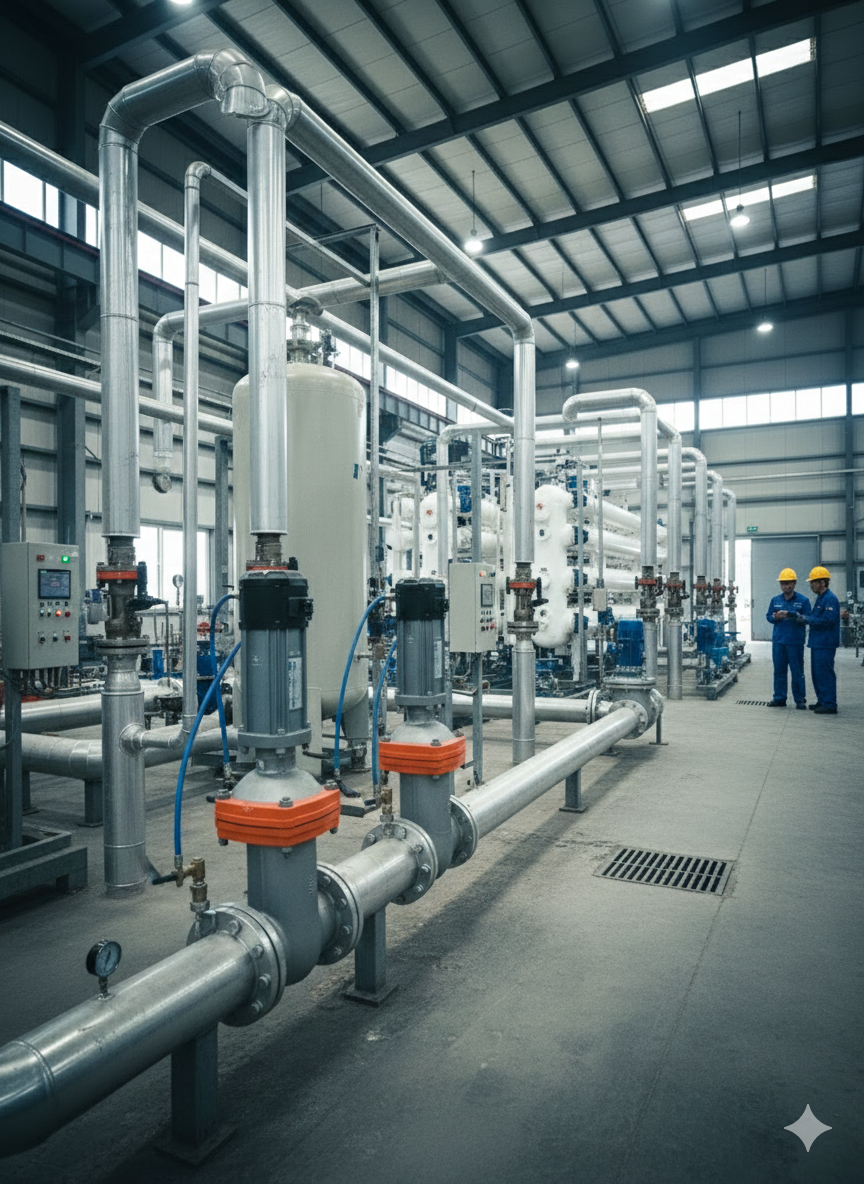
Pneumatic Actuator vs Electric Actuator: Their Differences
In the world of industrial automation, actuators play a vital role by turning energy into precise mechanical movements. Think of them as the essential link between what your control system tells you to do and the actual actions happening on the plant floor. When it comes to choosing the right kind of actuator, it usually comes down to three main types: hydraulic, pneumatic and electric—this article focuses on helping you choose between the two most common options: pneumatic and electric actuators.
The decision in the pneumatic vs. electric actuator debate is far from arbitrary; it directly impacts system performance, total cost of ownership (TCO), and long-term reliability. Next, we will provide a detailed analysis of their working principles, core strengths, and ideal applications, empowering you to select the optimal solution that aligns perfectly with your operational goals.
An Overview of Pneumatic Actuators
Working Principle
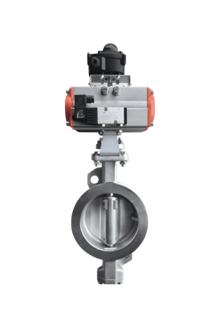
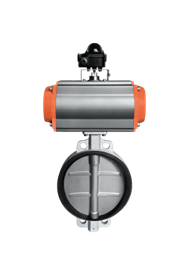
A pneumatic actuator operates using compressed air as its energy source. A solenoid valve, controlled by the central system, directs pressurized air into a cylinder. This pressure exerts force on a piston (for linear motion) or rack and pinion (for rotary motion), driving the valve or other mechanical component. Venting the air from the chamber, often assisted by a return spring, allows the actuator to return to its original or fail-safe position.
Advantages
- Fast Response: The rapid expansion of compressed air allows for extremely fast on/off cycles high-speed actuation, making them ideal for quick, repetitive tasks.
- Simple Structure: Their design is mechanically straightforward, which translates to high durability and reliability, especially in harsh conditions.
Limitations
- Lower Efficiency: The process of compressing air is inherently inefficient, leading to higher energy consumption over the long term. Air leaks in the system can further exacerbate this issue.
- Requires Air Supply Infrastructure: Operation depends on a complex system of compressors, filters, regulators, and tubing to deliver clean, dry, pressurized air. This infrastructure adds to the overall system cost and maintenance burden.
Common Applications
You'll find pneumatic actuators powering high-throughput applications across various industries, including packaging machinery, food and beverage processing, and automated assembly lines where speed and repetition are key. Their robust nature also makes them a safe choice for hazardous or explosion-prone environments.
An Overview of Electric Actuators
Working Principle
An electric actuator uses an electric motor—for precise control—to generate rotational force. A gear train reduces the motor's high speed and multiplies its torque. This low-speed, high-torque rotation is then converted into linear motion via a mechanical drive like a ball screw, lead screw, or rack and pinion mechanism. For rotary applications, the gearbox output shaft connects directly to the driven component.
Advantages
- Easy Integration: They integrate seamlessly with modern PLC and DCS systems, offering sophisticated programmability and real-time diagnostic feedback.
- Energy-Efficient: They consume power only when in motion, making them significantly more energy-efficient than pneumatic systems that require a constantly running compressor.
- Lower Peripheral Equipment Cost: Electric actuators eliminate the need for costly pneumatic infrastructure—such as compressors, dryers, air-supply piping, and specialized valves for air-supply control, resulting in a lower overall budget for peripheral system components compared to their pneumatic counterparts.
Limitations
- Higher Unit Price: The inclusion of motors, gear trains, and integrated control electronics results in a higher initial unit purchase price compared to basic pneumatic actuators of a similar force output, though the total system installation cost may be comparable.
- Environmental Specification: Performance in harsh conditions is not a limitation but a matter of proper specification. While a standard model is suited for clean, dry environments, electric actuators are easily configured for demanding conditions:
- Housings with high Ingress Protection (IP) ratings, such as IP67 or IP68, provide complete protection against dust and water ingress for washdown or outdoor applications.
- For hazardous locations with flammable gases or dust, actuators must be specified with explosion-proof certifications (e.g., ATEX, IECEx) to ensure safe, compliant operation.
Common Applications
Their precision makes electric actuators the go-to choice for applications in semiconductor manufacturing, medical and lab equipment, precision assembly, and smart factory environments where complex, programmable motion is required.
Pneumatic vs Electric: A Comparative Analysis
When choosing between these two technologies, a direct comparison of key performance metrics is essential. The pneumatic vs electric actuator decision often comes down to four critical areas.
1. Response Speed
While pneumatic actuators are faster in simple, end-to-end motion, electric actuators offer greater control over the entire motion profile. The rapid release of compressed air can generate cycle speeds that are difficult for comparably sized electric actuators to match.
2. Application Scope and System Complexity
Electric actuators offer superior simplicity for distributed systems, requiring only power and control cables. In contrast, pneumatic systems demand a complex infrastructure of compressors, tubing, and air treatment components (filters, dryers). This inherent complexity often makes electric systems simpler to deploy, maintain, and scale, especially across large facilities.
3. Overall Maintenance and Cost
Pneumatic actuators typically offer a lower initial purchase price, but electric actuators almost always result in a lower total cost of ownership (TCO). While the pneumatic device itself is simple, its support system—the compressor and air-line network—requires constant energy consumption and regular maintenance to prevent leaks and contamination. Electric actuators have virtually no peripheral components, leading to significantly lower long-term operating costs.
4. Energy Efficiency
In terms of energy efficiency, electric actuators have a fundamental advantage over pneumatic systems. Electric models consume power on demand, primarily during movement. Pneumatic systems rely on a compressor to maintain pressure, and the energy conversion process to produce compressed air is notoriously inefficient. In any application where energy consumption is a key factor, electric actuators are the clear choice.
Selection Recommendations: Making the Right Choice
The best choice is always application-dependent. Here’s a simple guide:
Choose Pneumatic Actuators for:
- Applications demanding extremely high speed and force in simple, repetitive cycles.
- Cost-sensitive projects where the initial purchase price is the primary driver.
- Hazardous or explosive environments where an ignition source is a concern (though explosion-proof electric options are widely available).
Choose Electric Actuators for:
- Processes requiring high-precision positioning, variable speed, and force control.
- Applications needing programmability, flexibility, and data feedback for smart manufacturing (Industry 4.0).
- Operations where long-term energy efficiency and a lower total cost of ownership are key priorities.
Frequently Asked Questions (FAQ)
Q1: What is the main difference between electric and pneumatic actuators?
A1: The fundamental difference lies in their power source and control capabilities. Electric actuators use electricity for highly precise, programmable control and are ideal for complex applications with low long-term maintenance. Pneumatic actuators use compressed air for simple, rapid, and high-force actuation, making them suitable for fast, repetitive processes.
Q2: Can a system originally using pneumatic actuators be converted to electric actuators?
A2: Yes, this is a common upgrade path for improving efficiency and control. The key is to analyze the mechanical interface of the valve or equipment, typically defined by the ISO 5211 standard for mounting flanges. By reviewing these specifications along with the performance parameters (force, speed, duty cycle) of the existing pneumatic actuator, an application engineer can recommend a suitable electric actuator to serve as a drop-in replacement.
Note: Carefully manage the wiring of the control circuits to ensure the newly purchased equipment is compatible with the existing system control signals.
Q3: What are the fail-safe options for electric vs. pneumatic actuators?
A3: Ensuring operational safety during a power or pressure loss is a critical design consideration, and both technologies achieve this reliably. The most common solution is a spring-return mechanism, which uses the force of a pre-loaded spring to automatically drive the actuator to a safe position. This is the inherent fail-safe method for pneumatic actuators upon loss of air pressure and is also a widely available option for electric actuators upon loss of power.
For more advanced control, electric actuators offer a distinct alternative: a capacitor Backup Unit (CBU). This device provides temporary electrical power, allowing the actuator to move to a pre-programmed safe state—which can be fully open, fully closed, or even a specific intermediate position—offering greater flexibility than a mechanical spring.
Conclusion: The Best Solution for Your Application
The ongoing pneumatic actuator vs electric actuator debate isn't about one technology replacing the other; it's about understanding that they offer distinct, often complementary, advantages. Pneumatic systems provide unparalleled speed and simplicity for specific tasks, while electric systems deliver the precision, efficiency, and intelligence demanded by modern automation. The optimal choice is not based on universal superiority but on a careful evaluation of your application's specific requirements for performance, cost, and long-term value.
Contact us at Li Jin. We focus on creating advanced solutions for controlling flow that work well and are dependable. If you need precise control with an electric actuator or a different special solution, our team of experts is here to help you understand your choices and find the best solution for you. We provide the intelligence and power to ensure your processes operate at their absolute best.
Discover our range of premium control valves and actuators designed for today's industry leaders.